

Pet Urine & Carpet Odor Guide
Why Does Pet Urine Odor Return After Carpet Cleaning?
Short answer: pet urine odor usually returns because the visible carpet fibers were cleaned, but odor-causing contamination remains deeper in the carpet backing, padding, tack strip, or subfloor. Warmth, humidity, and moisture from cleaning can make that hidden source easier to smell again. Use the humidity and pet-odor recurrence guide to record the room conditions and location pattern.
This does not automatically mean the carpet was not cleaned. It means routine carpet cleaning and urine decontamination are different services, and the correct treatment depends on how far the urine traveled.

The Main Reason: Urine Can Travel Below the Carpet
Carpet is only the top layer of a flooring system. A liquid accident can spread through the face yarns, primary and secondary backing, carpet pad, seams, tack strip, and porous subfloor. The spot visible on top may be smaller than the affected area below.
Standard professional carpet cleaning is designed to remove soil and residue from the carpet. It may improve light pet odor, but it cannot guarantee removal of contamination that the cleaning solution and extraction cannot reach.
Why the Smell Is Stronger After Cleaning or on Humid Days
Heat and humidity can make existing odors more noticeable. During cleaning, moisture reaches the carpet and the room may become warmer. If urine-related contamination remains below the surface, those conditions can temporarily amplify the smell. The same pattern can occur in summer, when windows are closed, or when indoor humidity rises.
The IICRC consumer carpet-care guide explains that elevated heat and humidity can amplify pet-related odors and that urine can cause lasting odor and fiber or dye changes. That is why an odor that returns after drying needs diagnosis—not simply more fragrance.
Four Common Reasons Pet Odor Returns
1. The source is in the padding
Cleaning the carpet face does not automatically flush the material held by an absorbent pad.
2. Accidents happened repeatedly
A pet may return to the same area, creating a larger and deeper contamination zone over time.
3. A deodorizer only masked it
Fragrance can improve the room temporarily without removing the underlying odor source.
4. The wrong area was treated
What appears to be one small spot may have spread outward underneath or may be one of several accident areas.
Pet-Urine Treatment Levels
The appropriate response depends on the location and severity of the contamination. Not every pet-odor job needs the most aggressive option.
| Condition | Likely depth | Possible approach | Expectation |
|---|---|---|---|
| Light pet odor, no known urine spots | Mostly surface fibers | Routine cleaning plus an appropriate deodorizing treatment | Often improves well |
| One or a few recent accidents | Carpet and possibly backing | Inspection, targeted treatment, dwell time, rinsing and extraction | Good potential, but stain and odor results vary |
| Repeated accidents in the same area | Backing and pad are likely involved | More extensive odor treatment or subsurface work may be needed | Standard cleaning alone may not solve it |
| Widespread or long-term contamination | Pad, tack strip, subfloor, baseboard, or nearby porous materials | Lifting carpet, replacing pad, sealing subfloor, or replacing affected materials may be necessary | Cleaning alone cannot be promised as a complete correction |
How a Professional Inspection Helps
A technician should ask where accidents occurred, how often they happened, how long the odor has been present, and what products were already used. Visual inspection and odor mapping help establish the likely boundaries. A UV or blacklight inspection can provide additional clues, but it is not perfect proof: not every deposit fluoresces, and a previously treated area may continue to fluoresce even after cleaning.
The inspection should also separate three different problems: visible staining, odor, and permanent color or fiber damage. A cleaner may improve the first two without being able to reverse dye loss or fiber damage caused by aged urine.
Clean It Best Field Process
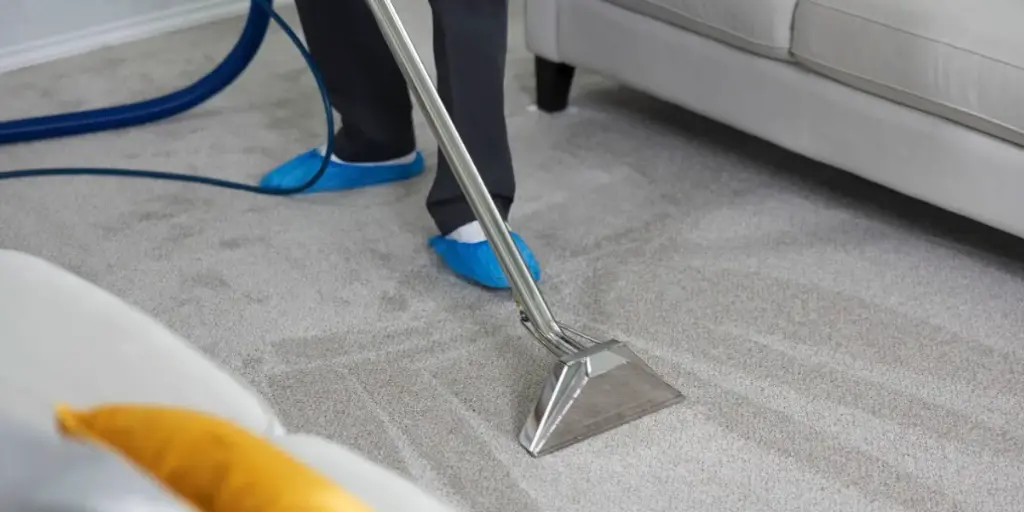
This is our real operating approach, not a made-up customer story: when a Metro Detroit customer says the odor returns in warm or humid weather, we do not judge the job only by how the surface looks. We ask about repeated accident areas and prior DIY products, inspect the affected zones, and use UV findings as one clue when appropriate.
For qualifying carpet, treatment may include targeted pet-odor chemistry, sufficient dwell time, and hot-water extraction with our truck-mounted system. If the pattern suggests contamination below the carpet, we explain before work begins that surface cleaning cannot guarantee complete odor removal from the pad or subfloor.
That expectation-setting matters. It helps the homeowner choose between routine cleaning, targeted treatment, more extensive corrective work, or replacement instead of paying repeatedly for the wrong service.
What Homeowners Should Do Before the Appointment
- Tell the cleaner every area where accidents may have happened, even if a stain is no longer visible.
- List the sprays, powders, disinfectants, or home-machine solutions already used.
- Do not heavily saturate the area again immediately before professional inspection.
- Keep pets and people off treated carpet until it is dry and the technician says it is safe to use.
- Expect an honest limitation if urine is believed to be in the pad or subfloor.
Frequently Asked Questions
Does odor returning mean the carpet cleaner did a bad job?
Not necessarily. Odor can return when contamination remains below the fibers that were cleaned. Poor rinsing or incomplete treatment can contribute in some cases, but the source depth must be diagnosed before assigning a cause.
Can enzyme treatment guarantee complete urine-odor removal?
No. The correct product, coverage, dwell time, carpet type, previous chemicals, contamination depth, and access to the source all affect the result. No responsible cleaner should guarantee unseen padding or subfloor contamination without inspection.
Why can the odor smell worse while the carpet is drying?
Moisture, warmth, and airflow changes can make an existing odor source more noticeable. The smell may lessen as the carpet dries, but persistent odor after full drying suggests remaining contamination or another source.
Can pet urine permanently damage carpet?
Yes. Aged urine can alter dyes, weaken fibers, and affect backing materials. Cleaning may reveal discoloration that soil previously hid, and cleaning cannot restore missing dye.
Should I replace the carpet?
Not always. Isolated, reachable contamination may respond to treatment. Replacement becomes more likely when accidents are widespread, the pad is heavily contaminated, the subfloor is affected, or the carpet has permanent damage.
Related Clean It Best Resources
Inspection, treatment options, and realistic limitations. Why Carpet Spots Return
Learn about wicking, residue, browning, and permanent damage. Current Carpet Cleaning Prices
See packages and available add-on treatments. Cheap vs. Professional Cleaning
Compare a surface clean with a complete process. Move-Out Carpet Cleaning
Help for renters, landlords, and property turnovers. Fresh Dog-Urine Spot Guide
Source-backed first steps before an accident spreads deeper. Carpet Dry-Time Estimator
Plan for carpet, humidity, treatment, and airflow. Michigan Apartment Turnover Checklist
Document pet zones and clean-versus-replace decisions. Pet Accident Carpet First-Aid Card
Print a rapid response, product-safety, and incident-record checklist. Pet Urine Severity Decision Tree
Classify fresh, localized, multiple-area, and subsurface conditions.
Plan Around Pets Before Odor Returns
Pets often shorten the practical interval between routine cleanings. Use the Carpet Cleaning Frequency Planner to estimate a schedule based on pet count, traffic, children, shoe habits, and current carpet condition. Before treating a new spot, check the Carpet Fiber & Soil Compatibility Matrix for fiber-specific cautions.
Pet Odor Returning in Your Carpet?
Clean It Best serves Metro Detroit with professional carpet cleaning and targeted pet-odor options. Tell us how many areas are affected, whether accidents were repeated, and when the odor is strongest so we can recommend the right starting point.